

An Essential Guide to Reliable Cruise Booking Merchant Services
Operating a cruise line or travel agency without a stable payment processor is like sailing into a category 5 hurricane without a rudder. One sudden account freeze can instantly paralyze your entire booking pipeline. Securing reliable cruise booking merchant services is critical for operators who must manage high-value deposits, multi-currency transactions, and complex payment schedules months before passengers ever set foot on a vessel.
Here is what you need to know at a glance:
- What they are: Dedicated merchant accounts built to handle the long booking-to-sailing cycle, phased payment structures, and international cardholder base unique to the cruise industry.
- Who needs them: Cruise lines, charter operators, river cruise companies, cruise travel agencies, and subscription-based cruise clubs.
- Why standard processors fall short: Generalist processors like Stripe or Square regularly decline or shut down cruise accounts because they classify advance-payment travel as high-risk.
- Key features to look for: Multi-currency processing, staged payment support, chargeback management, rolling reserve structures, and offline onboard transaction capability.
- Typical approval timeline: 24 to 72 hours for merchant account approval, with full payment method integration taking 5-7 business days.
The cruise industry is not a niche market. The global cruise sector was valued at approximately $36 billion in 2023 and is projected to grow at a compound annual growth rate of 7% over the coming years. North America alone accounts for roughly 50% of global cruise revenue, making it the single largest regional market on the planet.
That kind of growth is exciting for operators. But it creates a serious problem on the payment side.
Cruise bookings involve a payment timeline unlike almost any other industry. Deposits are collected anywhere from 6 to 18 months before sailing, and the final balance is typically due 60 to 90 days before departure. That means your payment processor is holding financial exposure for transactions tied to a service that has not yet been delivered, sometimes for well over a year.
Traditional banks and aggregate processors do not like that exposure. And when chargeback ratios creep above 1%, the scrutiny gets intense fast.
The result? Cruise operators frequently find themselves with accounts suddenly restricted, funds held without warning, or outright terminated at the worst possible moment in their booking cycle.
That is exactly the problem purpose-built cruise booking merchant services are designed to solve.
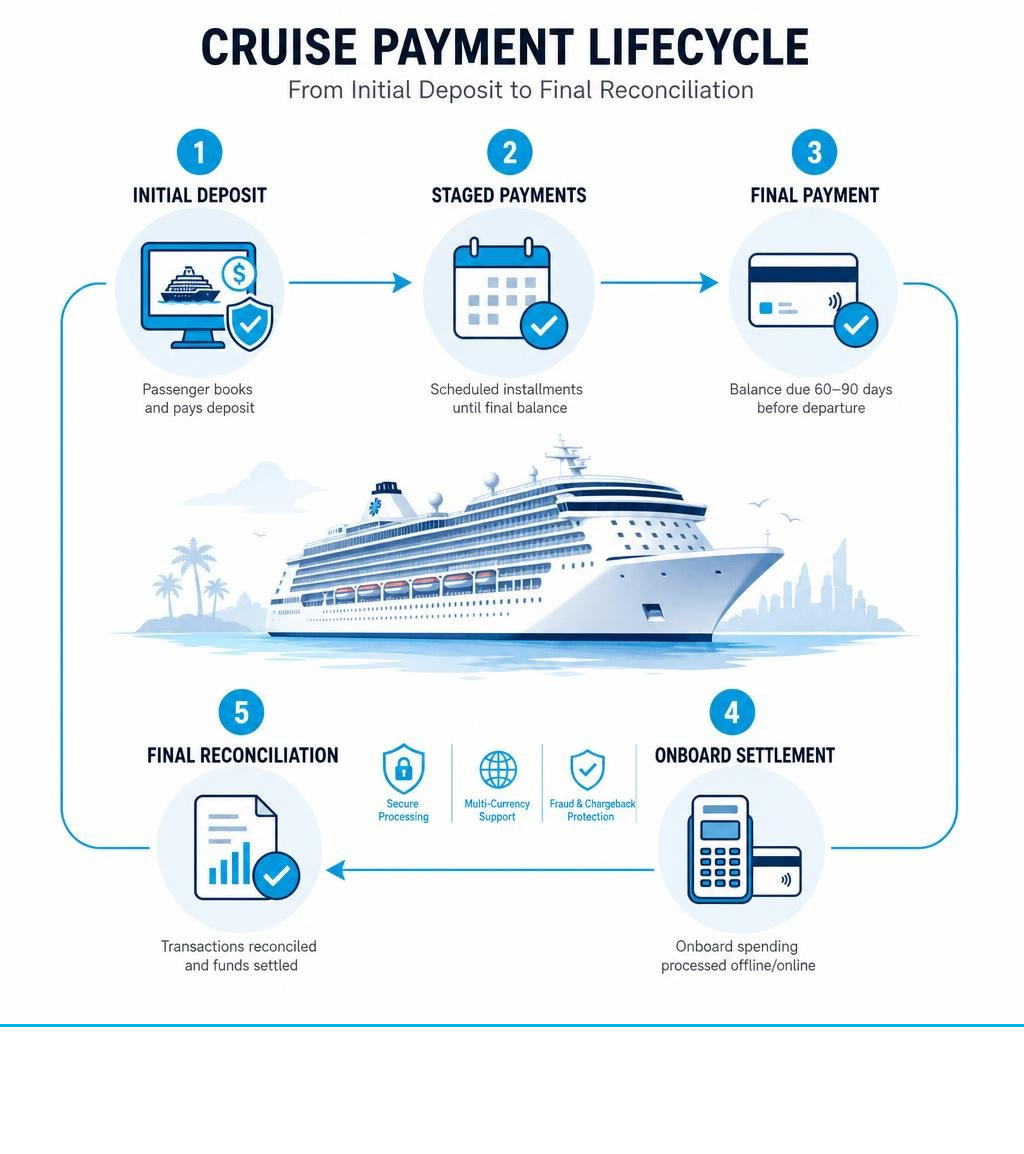
Handy cruise booking merchant services terms:
Why Cruise Booking Merchant Services Payment Processing Is Considered High-Risk
To secure reliable payment processing, we must first understand why acquiring banks view the cruise vertical with such extreme caution. The primary driver of this high-risk classification is future delivery risk.
When a passenger books a suite on a premium voyage, they pay a deposit up to 18 months in advance. From an underwriting perspective, that transaction is a liability until the ship departs and the service is successfully rendered. If the cruise line faces operational issues, mechanical failures, or severe weather events that force cancellations, the processor is on the hook for massive chargeback exposure if the merchant cannot cover the refunds. This is why standard processors often decline these transactions.
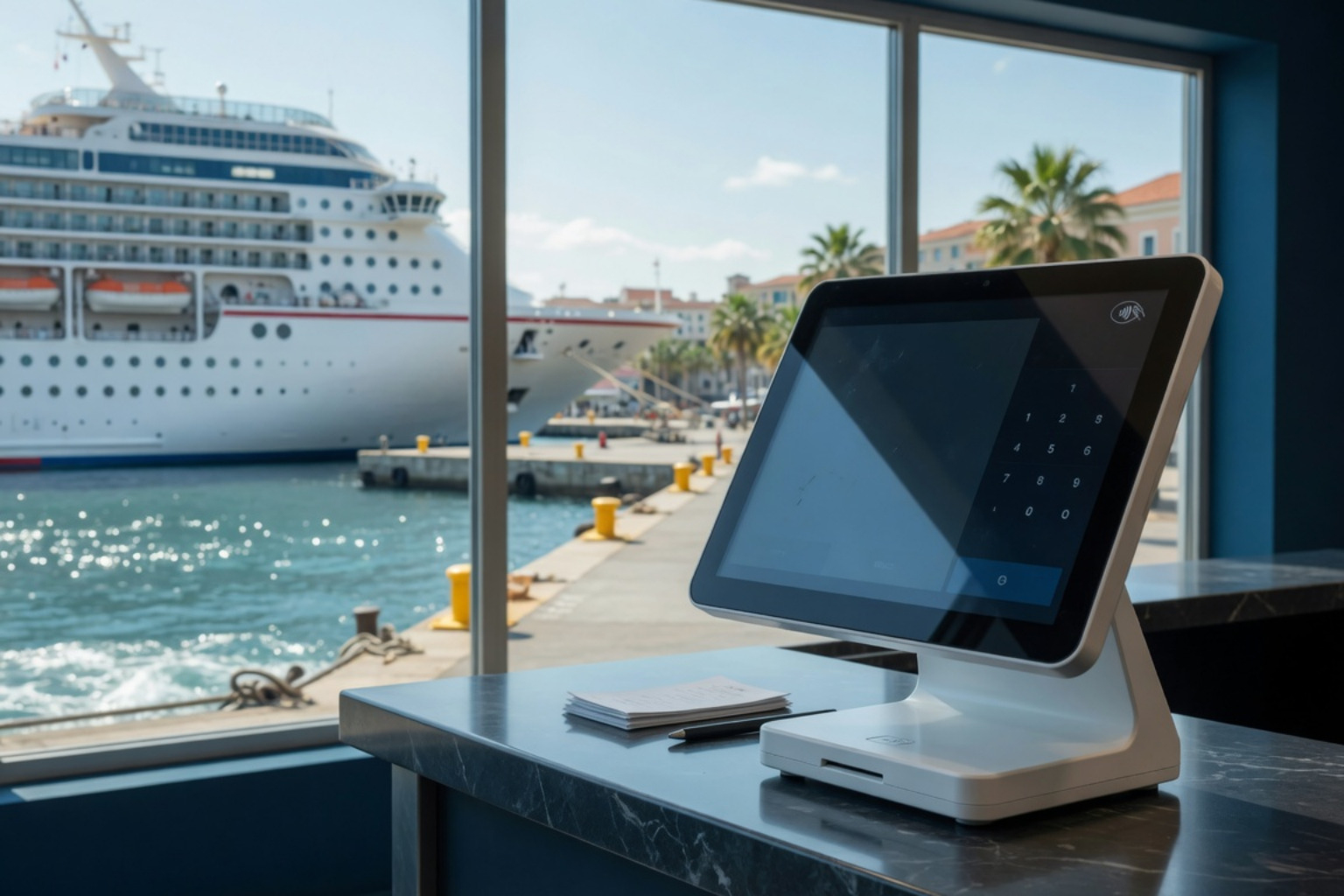
Furthermore, the average ticket size for cruise bookings is exceptionally high, often reaching thousands of dollars. High-ticket transactions naturally attract friendly fraud, where cardholders dispute legitimate transactions, and actual card-not-present fraud.
To mitigate these risks, acquiring banks enforce strict Know Your Business (KYB) and compliance checks. Underwriters require complete documentation, including business registration, financial statements, and proof of industry licensing.
Additionally, merchants must maintain strict PCI DSS compliance to secure passenger data. For a deeper look at navigating these complex requirements, read our A-Z guide to cruise line merchant processing and explore Everything you need to know about high-risk merchant accounts.
Requirements for Cruise Booking Merchant Services Merchant Account Approval
To secure approval for a dedicated merchant account, underwriters require comprehensive documentation to assess financial stability and compliance. Because of the high-risk nature of the travel industry, you must provide:
- Business Registration: Official incorporation documents and active business licenses.
- Financial Statements: Assuming you will need more than $100K/mo in processing volume, you should expect to provide at least two years of audited financial statements or tax returns.
- Processing History: 3 to 6 months of recent merchant processing statements showing low chargeback ratios.
- Bank Statements: 3 months of business bank statements demonstrating healthy cash reserves.
- Operational Policies: A clear, easily accessible refund and cancellation policy displayed on your website.
Having these documents prepared ensures a seamless onboarding process with specialized high-risk acquirers. To streamline this, you can follow our guide on Opening a merchant account: a step-by-step guide to ensure your application is approved without delay.
Understanding Cruise Booking Merchant Services Payment Processing Rates and Fees
Acquirers structure rates for high-risk travel merchants using interchange-plus pricing or tiered models. Because of the high-risk nature of cruise bookings, processing fees typically range from 2.5% to 4.5%, depending on your chargeback history and volume.
Acquirers also manage their exposure through reserve requirements. Rather than applying a flat-rate reserve that chokes your cash flow, a specialized high-risk acquirer will implement calendar-modeled rolling reserves.
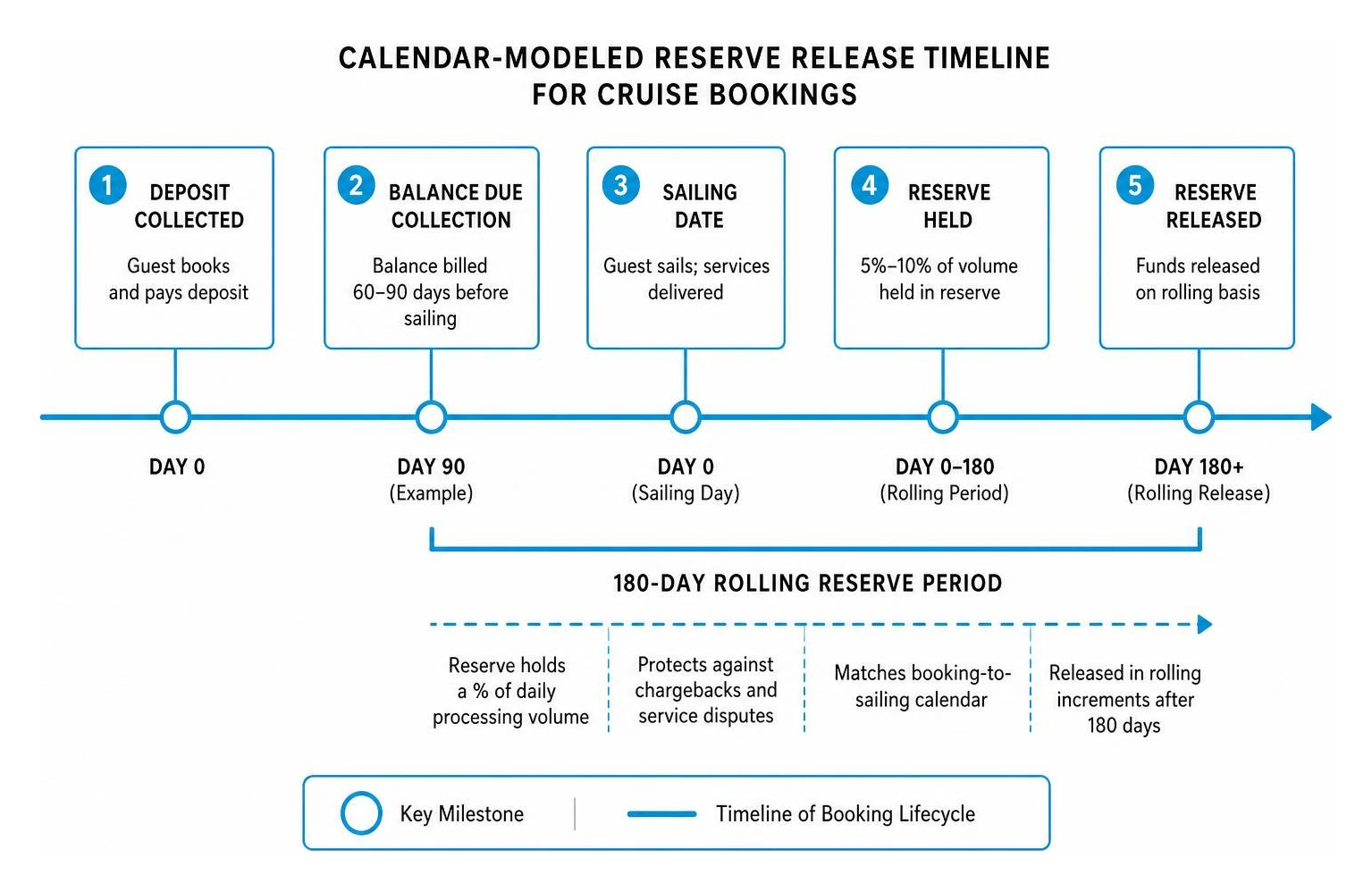
Under this model, a set percentage, usually 5% to 10% of your daily processing volume, is held in a temporary reserve account and released on a rolling basis, typically 180 days, matching your booking-to-sailing calendar. This protects the bank while ensuring you maintain predictable operational liquidity, but if you have clean previous processing history, we can work with the processing bank to remove the reserve for approval.
To better manage these financial safeguards, read our guides on what is a credit card chargeback and the ultimate guide to chargeback prevention.
Ready to Secure Your Cruise Booking Merchant Services?
At Vector Payments, we specialize in high-risk merchant accounts with transparent rates, robust chargeback protection, and 7-day support. We help cruise lines, travel agencies, and tour operators secure their payment infrastructure and protect against sudden post-approval shutdowns.
Contact Vector Payments TodayFrequently Asked Questions About Cruise Booking Merchant Services
Why do standard payment processors decline cruise merchants?
Standard payment processors rely on aggregate underwriting models. They pool thousands of low-risk businesses together to offer quick onboarding. Because they have zero appetite for future delivery risk, high ticket sizes, or chargeback ratios near 1%, they will instantly decline cruise operators or initiate sudden account shutdowns.
To understand how a dedicated high-risk account protects your business from these disruptions, explore the Advantages of Vector Payments over major processors.
What is the typical onboarding timeline for a cruise merchant account?
With a specialized provider, the initial merchant account underwriting and approval process takes between 24 and 72 hours, provided all KYB and financial documentation is submitted correctly.
Once approved, integrating the payment gateway with your specific reservation systems and onboarding alternative payment methods typically takes 5-7 business days depending on the structure needed. For a detailed walkthrough of this process, consult our Opening a merchant account: a step-by-step guide.
How do offline transactions work during voyages?
Processing payments at sea requires robust technology that can handle limited or intermittent satellite connectivity. Onboard point of sale systems securely store card tokens offline while the ship is in open waters.
Once the vessel establishes port connectivity or a stable satellite link, the system uploads the transactions, such as Fidelio files, for real-time authorization and settlement. To ensure your shipboard commerce never halts, you need specialized POS solutions designed for maritime environments.