
Cruise Line Merchant Services: High-Risk Payment Processing for Maritime Operators
Operating a maritime business without stable payment processing exposes your fleet to sudden financial paralysis, frozen booking revenues, and the constant threat of transaction declines, which is why securing reliable cruise line merchant services is critical to your survival.
Here’s What You Need to Know at a Glance
- What they are: Merchant accounts and payment gateways built to handle advance bookings, staged payments, onboard spending, and international transactions for cruise operators.
- Why they are different: Cruise lines are classified as high-risk by most payment processors due to high ticket values, long gaps between booking and travel, and elevated chargeback exposure.
- Who needs them: Any cruise operator, from single-vessel charter companies to large international fleets, accepting credit cards, digital wallets, or ACH payments.
- What to look for: Multi-currency support, chargeback mitigation tools, onboard POS compatibility, and a processor that will not shut you down after approval.
- How long approval takes: Typically 24 to 72 hours with a specialized high-risk processor, compared to weeks or outright rejection with mainstream providers.
The global cruise market is valued at approximately $36 billion and is growing at a projected rate of 7% annually. That growth means more passengers, more transactions, more currencies, and more complexity.
Most standard processors are simply not built for this. High ticket values combined with payments collected months before a passenger ever steps onboard creates a risk profile that makes traditional banks and mainstream processors nervous. Many will decline your application outright or, worse, approve you and shut you down later.
That is the core problem this guide addresses. Understanding how cruise line merchant services work, why the high-risk label gets applied, and what to look for in a processing partner is the difference between stable revenue flow and a business that cannot collect payments at all.
Why Cruise Line Merchant Services Payment Processing Is Considered High-Risk
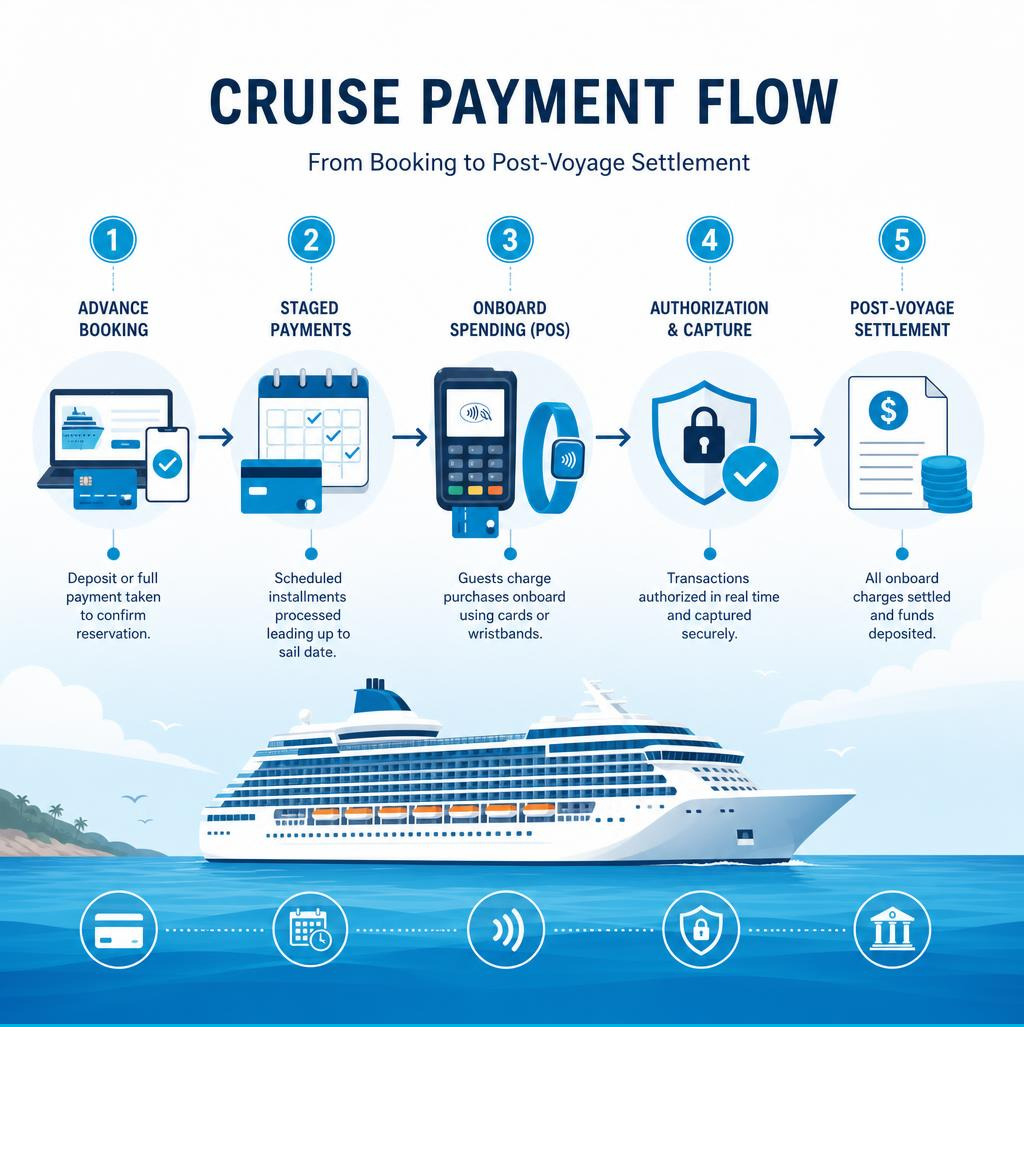
Operating a cruise line requires managing a floating city. Between booking cabins, scheduling shore excursions, and handling onboard retail, your payment ecosystem is incredibly complex. Standard merchant accounts are built for immediate fulfillment: a customer swipes a card, receives a product, and the transaction is complete. For cruise lines, the payment journey is entirely different.
When a passenger books a cruise, they often pay a deposit or the full ticket price up to a year in advance. This creates a massive window of exposure for the acquiring bank. If your cruise line experiences operational issues, weather disruptions, or financial instability during that time, the bank is ultimately liable for refunding those high-ticket transactions.
To manage this exposure, payment processors rely on Merchant Category Codes (MCCs) defined by the International Organization for Standardization (ISO 18425). These codes help financial institutions categorize businesses based on their risk profiles, transaction patterns, and industry-specific chargeback rates. Because cruise lines present a unique combination of delayed service delivery and high-value transactions, they are placed in a restrictive high-risk category.
Standard vs. High-Risk Cruise Merchant Accounts
Why Traditional Processors Decline Cruise Line Merchant Services
Mainstream payment processors prefer predictable, low-risk business models. When they evaluate a cruise line, they see a high-volume merchant with a long delay between the initial transaction and the actual delivery of the service. This delayed fulfillment model is the primary reason traditional processors decline cruise lines.
If a passenger decides to dispute a charge three months after booking because of a change in plans or a cancelled route, the processor faces a chargeback. When hundreds of passengers dispute tickets simultaneously due to a cancelled voyage, the financial liability can easily reach millions of dollars. Rather than taking on this risk, traditional processors choose to issue a blanket decline to cruise operators.
For operators looking to secure stable processing, partnering with a specialized high-risk provider is essential. This ensures your account is backed by an acquiring bank that understands the hospitality sector. To learn more about how specialized underwriting supports high-ticket travel operations, explore our guide on Travel Payment Processing.
High-Risk Classification and Merchant Category Codes
Every business that accepts credit cards is assigned a four-digit Merchant Category Code (MCC). For cruise lines, the standard classification is MCC 4411 (Cruise Lines). This code immediately signals to acquiring banks that the merchant operates in a high-ticket, high-risk sector with delayed fulfillment.
High-risk classifications are not exclusive to the travel sector. Other specialized industries, such as high-end smoke shops, vape retailers, and medical spas, also operate under specific MCCs that require specialized underwriting. While a smoke shop faces risk due to age-verification requirements and shifting regional regulations, a medical spa faces risk from high-ticket packages and delayed treatments.
Just as we build secure payment frameworks for wellness clinics, which you can read about in our guide on Med Spa Payment Processing, we apply the same rigorous risk-management principles to cruise lines. By placing your business under the correct MCC and presenting a transparent risk profile to our domestic acquiring partners, we protect your merchant account from sudden, post-approval shutdowns.
Common Challenges for Cruise Line Merchant Services Merchants
Processing payments at sea introduces technical and financial challenges that land-based businesses never have to consider. From maintaining transaction security across international waters to managing high chargeback ratios, cruise operators must navigate a highly volatile processing environment.

The primary challenges cruise operators face include:
- Fluctuating Connectivity: Cruise ships sail through remote areas where satellite internet can be slow, expensive, or entirely offline.
- Card-Not-Present (CNP) Fraud: High-value online bookings are prime targets for fraudsters using stolen card details.
- High Chargeback Ratios: Cancellations, itinerary changes, and passenger disputes can easily push chargeback rates above the standard 1% threshold, resulting in increased scrutiny or account termination.
- High Transaction Volume: During peak embarkation hours or port days, onboard retail and excursion desks experience massive spikes in transaction volume that require immediate processing.
To maintain operational stability, cruise lines must utilize payment systems that bridge the gap between online booking engines and onboard point-of-sale (POS) hardware. Understanding how these systems interact is key to reducing transaction declines and protecting your bottom line. For an in-depth look at the operational advantages of specialized processing, see our resource on Travel Related Merchant Services Benefits.
Managing Long Booking Lead Times and Staged Payments
The typical booking window for a cruise is anywhere from three to twelve months before departure. During this extended period, the payment processor holds the risk for the transaction. To minimize passenger friction and secure bookings early, cruise lines must offer flexible payment structures.
This requires a merchant account that natively supports:
- Initial Deposits: Capturing an upfront, partial payment to secure the cabin.
- Staged Payments: Automatically scheduling installment payments leading up to the departure date.
- Final Balances: Securely processing the remaining balance on a set date without requiring the passenger to re-enter their card information.
Managing these multi-stage billing cycles requires robust tokenization, ensuring that passenger card data is stored securely and processed automatically in compliance with PCI-DSS standards. For luxury operators who manage high-ticket, customized itineraries, these flexible billing options are critical for maintaining high approval rates. You can read more about managing premium travel transactions in our guide to Luxury Travel Payment Processing.
Mitigating Chargebacks and Transaction Fraud
In the cruise industry, a chargeback ratio above 1% is a major red flag for acquiring banks. Because cruise tickets represent a significant financial commitment, passengers are more likely to file a dispute with their credit card company rather than requesting a refund directly from the operator, especially if your refund policy is strict.
To combat this, cruise lines must implement an active chargeback mitigation strategy. This includes using 3D Secure (3DS) technology, which adds an extra layer of verification for online bookings by requiring passengers to complete a two-factor authentication step with their card issuer. Additionally, real-time fraud screening tools can analyze transactions for indicators of fraud before the booking is confirmed.
At Vector Payments, we provide our merchants with advanced dispute management tools that alert you the moment a chargeback is initiated, giving you the opportunity to resolve the issue directly with the customer before it impacts your merchant account standing. To secure your processing and implement these tools, visit Vector Payments.
Understanding Cruise Line Merchant Services Payment Processing Rates and Fees
To keep your operations running smoothly both on land and at sea, understanding the pricing structure of your merchant account is essential. A generic retail merchant account will quickly fail when faced with the multi-currency, multi-channel demands of a global cruise line, and the rates you pay reflect these operational complexities.
High-risk processors typically offer interchange-plus pricing, which is the most transparent model. This ensures you know exactly what the card brands charge versus what the processor keeps, with no hidden markups.
When evaluating the cost of your payment processing, several factors influence your overall rates and fees:
- Omnichannel Payment Gateways: Seamlessly connecting your online booking system, phone reservation center, and onboard retail shops under a single reporting dashboard.
- Offline Transaction Capture: Enabling onboard POS systems to securely swipe and store transactions when satellite connectivity is lost, automatically processing them once a connection is restored.
- Dynamic Currency Conversion (DCC): Allowing international passengers to view and pay for onboard purchases in their home currency while you settle in USD, which can offset processing costs by generating additional conversion revenue.
- Multi-Currency Pricing (MCP): Displaying ticket prices in multiple currencies on your website to drive international conversions.
For a comprehensive overview of how these features integrate into a unified payment ecosystem, check out our Cruise Line Payment Processing Solutions page.
Omnichannel Payment Gateways and Onboard POS Systems
A passenger’s payment journey begins on your website, continues at the port terminal during embarkation, and extends to every bar, restaurant, spa, and retail shop onboard the ship. Managing this journey requires an omnichannel payment gateway that unifies all transactions.
Onboard the ship, connectivity is never guaranteed. If your ship loses its satellite connection in the middle of the ocean, your bartenders and retail staff cannot stop accepting payments. This is where “Store and Forward” technology becomes critical.
Modern EMV terminals equipped with offline processing capabilities can securely capture and encrypt card data at the point of sale. Once the ship regains internet access, the system automatically forwards the stored transactions to the processor in batches. This prevents transaction declines and ensures your onboard revenue stream remains uninterrupted. To set up secure, offline-capable terminal solutions for your fleet, explore Vector Payments High-Risk Merchant Accounts.
Multi-Currency Processing and Dynamic Currency Conversion
Cruise lines attract a global clientele. If your ship departs from a port in Florida but carries passengers from Canada, the United Kingdom, and Germany, forcing every guest to pay in USD can lead to friction, cart abandonment, and unexpected foreign transaction fees on their bank statements.
By integrating Dynamic Currency Conversion (DCC) into your onboard POS terminals, guests are given the choice to pay in their local currency at the point of sale. This improves the passenger experience and opens up a new revenue stream for your cruise line, as operators often keep a percentage of the conversion fee.
Regardless of the currency your passengers choose to pay in, a domestic merchant account based in the United States will settle your funds directly in USD, eliminating currency fluctuation risks for your accounting team.
Requirements for Cruise Line Merchant Services Merchant Account Approval
Securing approval for a cruise line merchant account requires passing a rigorous underwriting process. Because cruise lines operate in international waters and touch multiple jurisdictions, the regulatory compliance and Know Your Business (KYB) requirements are much stricter than those of standard e-commerce businesses.
To pass the underwriting process, cruise operators must provide extensive documentation:
- Business Registration: Articles of incorporation, tax ID (EIN) documentation, and business licenses.
- Financial Statements: Minimum of two years of audited financial statements and corporate tax returns.
- Processing History: At least three to six months of previous merchant processing statements showing transaction volumes and chargeback ratios.
- Passenger Cruise Line License: Proof of authority to operate passenger vessels in your targeted regions.
- Maritime Safety and Environmental Certificates: Documentation proving compliance with international maritime safety and environmental regulations.
- Anti-Money Laundering (AML) Policies: Clear compliance frameworks for high-value onboard transactions, particularly if your vessel features an onboard casino.
Underwriters will also evaluate risk mitigation factors such as rolling reserves (typically 5% to 10% held for 180 days), processing caps, and strict refund policies to protect the acquiring bank from potential chargeback liabilities.
Frequently Asked Questions about Cruise Line Merchant Services
Why are cruise lines classified as high-risk by payment processors?
Cruise lines are classified as high-risk primarily due to their delayed fulfillment business model and high average ticket sizes. Because passengers book cruises months in advance, acquiring banks face prolonged chargeback exposure. If a cruise line experiences operational failure, severe weather cancellations, or bankruptcy during that window, the bank is legally responsible for refunding the cardholders. Additionally, seasonal fluctuations in transaction volume and the complexity of international maritime regulations contribute to the high-risk designation.
Can cruise ships process transactions offline while at sea?
Yes. Modern maritime point-of-sale (POS) systems utilize “Store and Forward” technology to handle offline transactions. When a cruise ship sails through areas with limited or no satellite connectivity, EMV card readers securely capture and encrypt the passenger’s transaction details. The data is stored locally on the ship’s secure server and is automatically batched and processed once the vessel’s internet connection is restored or when the ship docks at a port.
How long does it take to get approved for a cruise merchant account?
The underwriting timeline for a cruise line merchant account typically ranges from 24 to 72 hours when working with a specialized high-risk processor. Because the underwriting process is highly rigorous and requires verifying KYB documentation, maritime safety compliance, and financial history, standard banks can take several weeks or decline the application outright. Specialized processors streamline this boarding process to ensure a stable, secure setup.
Conclusion: Securing Your Cruise Line Merchant Services
Navigating the waters of cruise line merchant services does not have to be a turbulent experience. While the high-risk classification, long booking lead times, and complex maritime regulations present real obstacles, partnering with the right payment processor ensures your business remains financially stable and operational.
By choosing a specialized provider that understands the unique demands of the travel and hospitality sectors, you protect your cruise line from the threat of declined transactions, frozen funds, and unexpected post-approval shutdowns.
Ready to Secure Your Cruise Line Merchant Services?
At Vector Payments, we specialize in providing high-risk businesses with the stable, transparent, and secure payment processing solutions they need to grow. With interchange-plus pricing, advanced chargeback mitigation tools, and dedicated 7-day support, your payment systems are always ready for smooth sailing.
Why Cruise Line Merchant Services Face Account Shutdowns
In the high-risk processing space, many merchants experience sudden “post-approval shutdowns.” This occurs when a mainstream processor or automated aggregator approves an account quickly using automated systems, only to freeze or terminate it a few weeks later once their underwriting department actually reviews the high transaction volumes, long booking lead times, or chargeback activity.
Traditional processors prefer predictable, low-risk business models. When they realize a merchant is operating a cruise line with high ticket values and services delivered months after payment, they immediately classify the account as outside their risk tolerance. To prevent these disruptive shutdowns, cruise lines must partner with a dedicated high-risk provider that conducts thorough, upfront underwriting and places the business under the correct Merchant Category Code (MCC 4411) from day one.
Top Cruise Line Merchant Services Payment Processing Providers
When selecting a payment processing partner for your fleet, you need a provider that specializes in high-risk maritime operations rather than a generic retail processor. The top providers in this space offer:
- Vector Payments: A leading provider of specialized high-risk merchant accounts, offering transparent interchange-plus pricing, advanced chargeback mitigation tools, offline “Store and Forward” POS integration, and dedicated 7-day support to ensure your payment systems run smoothly at sea and on land. To discuss a customized processing solution for your fleet, contact us through our Cruise Line Payment Processing page.
- Specialized High-Risk Acquirers: Domestic acquiring banks that understand the travel and hospitality sectors, providing stable processing without the threat of sudden post-approval shutdowns.
- Worldwide Reach: Vector Payments has access to a broad network of international processing banks to help ensure merchants outside of the USA or Canada have compliant card processing available as well.
Avoid unvetted offshore processors or automated aggregators that promise instant setup but lack the technical infrastructure and regulatory compliance required for international maritime commerce.