

Why Stripe, Square, and PayPal Shut Down Peptide Businesses
Why Stripe, Square, and PayPal shut down peptide businesses is one of the most common and costly issues facing companies in this space. Many peptide businesses start with these platforms because they are easy to set up, but they are not built to support high-risk industries. If you are selling peptides, there is a high likelihood your account will eventually be flagged, restricted with funding holds, or shut down entirely. This is not random. It is how these platforms are designed. Businesses that rely on these platforms without understanding the risks often face sudden disruptions that impact revenue, customer experience, and long-term growth.Key Summary
- Stripe, Square, and PayPal are built for low-risk businesses, not peptide companies
- Peptide businesses are automatically flagged due to compliance and risk classification
- Shutdowns typically happen after activity review, not during initial approval
- Funds can be held or frozen during account termination
- High-risk processors provide long-term stability and proper underwriting
Why Peptide Payment Processing Gets Flagged
Peptide businesses fall into a category that payment processors consider high risk. This includes products tied to research compounds, regulated substances, and alternative wellness applications. From the start, businesses operating in this space need peptide payment processing that is structured for compliance and long-term approval. Traditional processors rely heavily on automated systems that scan for risk signals. These systems are not designed to interpret nuance. If your website, product descriptions, or transaction patterns match known high-risk indicators, your account will be flagged. This happens regardless of whether your business is operating legitimately.How Stripe, Square, and PayPal Actually Operate
Stripe, Square, and PayPal are payment facilitators. This means they aggregate thousands of businesses under one master account and apply strict risk controls to protect that ecosystem. Instead of underwriting your business upfront, they approve quickly and monitor activity over time. Once something is flagged, action is taken immediately. This model works well for low-risk businesses. It does not work for peptide companies.Peptide Payment Processing
Why Stripe, Square, and PayPal Shut Down Peptide Businesses
Learn why mainstream payment processors flag peptide businesses, how shutdowns happen after approval, and what businesses should do to avoid frozen funds and account termination.
Apply for High-Risk ProcessingThe Real Reasons Peptide Businesses Get Shut Down
1. Violation of Acceptable Use Policies
Most mainstream processors explicitly prohibit or restrict products related to peptides, research chemicals, or regulated wellness categories. Even if your account is initially approved, it may be flagged once reviewed.2. Automated Risk Monitoring
These platforms use algorithms to detect risk patterns. Certain keywords, transaction behaviors, or product types can trigger alerts without human review.3. Chargeback Risk
Peptide businesses often face higher-than-average chargeback rates. When thresholds are exceeded, accounts are quickly restricted or terminated, which is why understanding prevention strategies like those outlined here is critical for long-term stability.4. Lack of Proper Underwriting
Payment facilitators do not fully evaluate your business upfront. This leads to mismatches between your business model and their risk tolerance.5. Compliance Concerns
Even minor issues with product descriptions, disclaimers, or website structure can result in account reviews or shutdowns.What Happens After You Get Shut Down
When a payment processor shuts down your account, the impact is immediate.- Payments stop processing
- Funds may be held for extended periods
- Your business may be flagged internally across networks
- Reapplying with similar providers becomes more difficult
You Always Have Options to Switch
Many business owners assume that once they are shut down, they are out of options. That is not the case. There are providers built specifically for high-risk industries, and as explained here, switching to the right processor can completely change the trajectory of your business.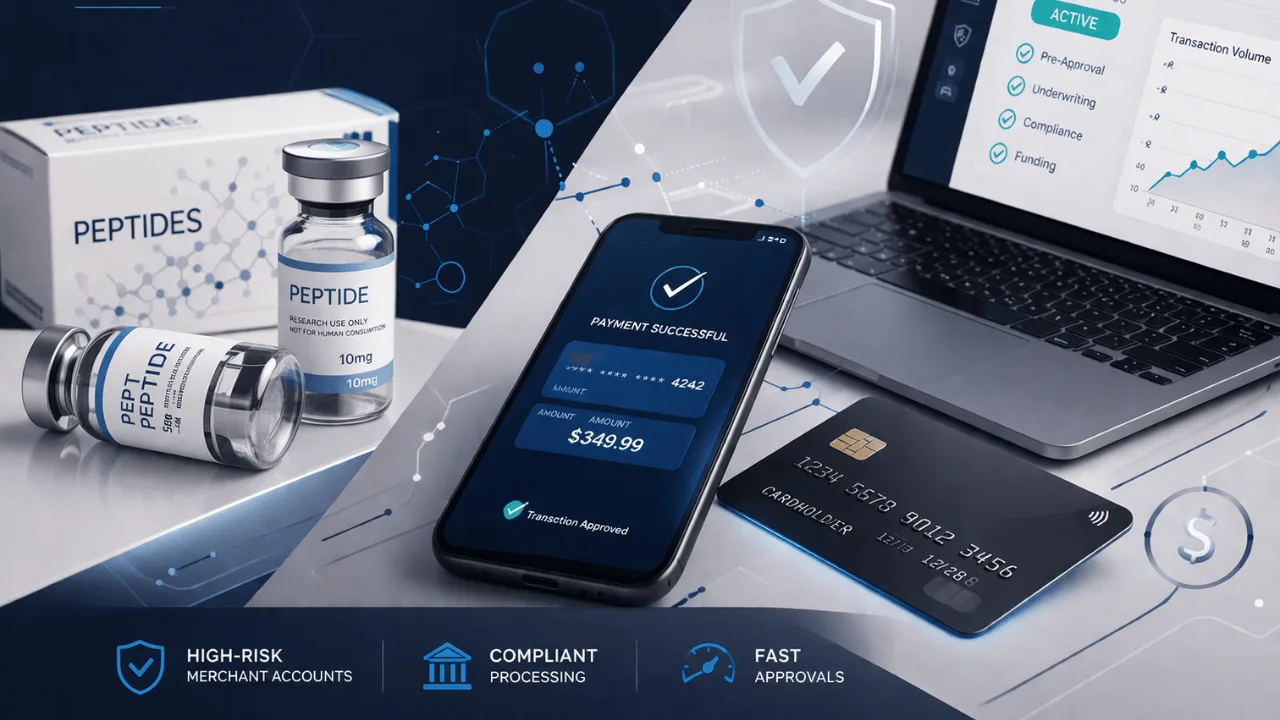
From checkout to approval, seamless payment processing for peptide merchants.
The Right Way to Handle Peptide Payment Processing
The solution is not to find a workaround. It is to set up your business correctly from the start. Working with a provider that specializes in peptide payment processing solutions ensures your business is evaluated properly and supported long term. If you need a step-by-step breakdown, review how to set up a peptide merchant account to understand the correct setup process. With high risk payment processing, your business is matched with banks that understand your industry and are willing to support it. Vector Payments is built for this exact scenario. Instead of reacting to shutdowns, the goal is to prevent them entirely. Explore more about supported industries here: IndustriesFrequently Asked Questions
Why do Stripe and PayPal shut down peptide businesses?
Stripe and PayPal shut down peptide businesses because these products fall into high-risk or restricted categories. Their systems are designed to flag and remove accounts that do not align with their acceptable use policies.Can I keep using Square for my peptide business?
Square may allow initial approval, but long-term use is unreliable for peptide businesses. Accounts are often flagged after activity review, leading to shutdowns or restrictions.What happens to my money if my account is shut down?
Funds are often held for a reserve period, which can last weeks or months depending on the provider’s policies and perceived risk level.Is there a safer alternative to Stripe for peptide businesses?
Yes. High-risk payment processors are specifically designed to support peptide businesses with proper underwriting, compliance support, and long-term stability.How do I avoid getting shut down again?
You need a processor that understands your business model from the start. Setting up a compliant merchant account with a high-risk provider prevents future disruptions.Get Approved Before It Becomes a Problem
If you are currently using Stripe, Square, or PayPal, your business is exposed to risk whether you realize it or not. The best time to secure a stable solution is before your account is flagged or shut down.
Apply for High-Risk Processing