

Securing Your Medical Practice with a HIPAA Payment Gateway Provider
One data breach or a single non-compliant transaction can trigger federal penalties up to $1.5 million, effectively ending a medical practice overnight. Choosing a specialized HIPAA payment gateway provider is not just a technical choice; it is a legal necessity for any healthcare business handling Protected Health Information (PHI). Standard processors often lack the security protocols required to protect patient data, leaving your practice vulnerable to both hackers and federal regulators.
Why HIPAA Payment Gateway Provider Payment Processing Is Considered High-Risk
Healthcare is a prime target for cybercriminals because medical records are significantly more valuable on the dark web than credit card numbers alone. A HIPAA payment gateway provider must navigate the high-risk nature of the industry, which stems from the sensitive intersection of financial data and PHI. For businesses involved in telemedicine and online pharmacy payment processing, the risk is amplified by high transaction volumes and the potential for regulatory scrutiny regarding prescription fulfillment.
Requirements for HIPAA Payment Gateway Provider Merchant Account Approval
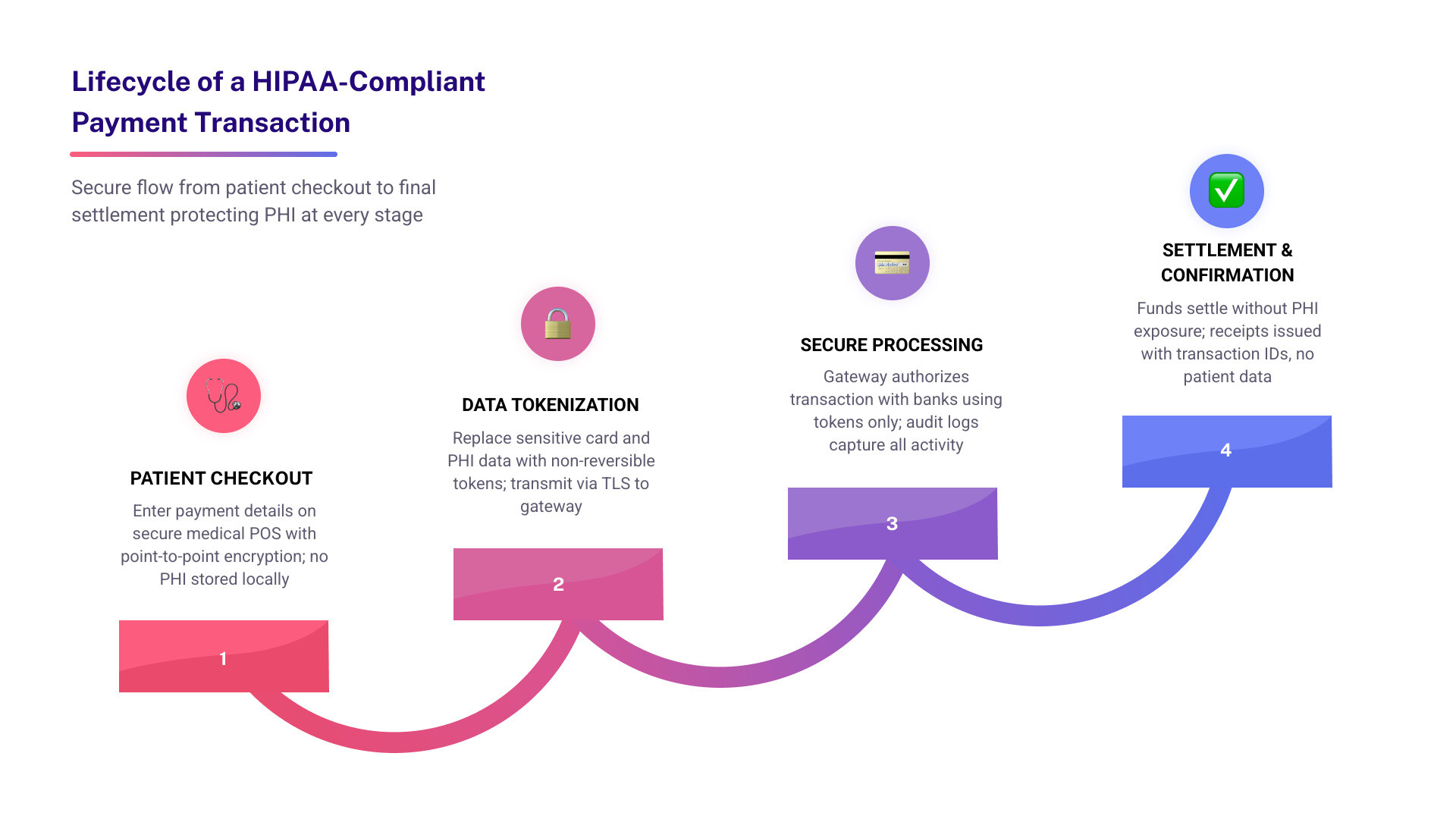
To secure approval for a healthcare payment processing account, providers must meet stringent criteria. A HIPAA payment gateway provider will require a signed Business Associate Agreement (BAA), which legally binds the processor to protect PHI. Additionally, merchants must demonstrate PCI DSS Level 1 certification and provide documentation showing how their payment workflows integrate with Electronic Health Records (EHR) without exposing sensitive diagnostic data.
Understanding HIPAA Payment Gateway Provider Payment Processing Rates and Fees

While many generic processors offer flat-rate pricing, a specialized HIPAA payment gateway provider typically utilizes interchange-plus pricing to offer better transparency. Because healthcare is classified as high-risk, fees may reflect the added security infrastructure such as tokenization and end-to-end encryption required to maintain compliance. Investing in a stable merchant account prevents the hidden costs of data breaches and legal non-compliance.
Why HIPAA Payment Gateway Provider Face Account Shutdowns

Many medical practices experience sudden account freezes because they use generic processors that do not support the telemedicine industry or high-ticket aesthetic services. A HIPAA payment gateway provider understands that if a processor discovers you are handling PHI without a BAA, they will often terminate the relationship immediately to protect themselves from liability. This “Strategic Sam” approach to underwriting ensures that your account is vetted properly from day one to avoid disruptions.
Top HIPAA Payment Gateway Provider Payment Processing Providers
When evaluating a HIPAA payment gateway provider, look for partners like Vector Payments that specialize in high-risk healthcare sectors. The best providers offer seamless API integrations, dedicated support, and the ability to handle complex billing cycles for subscription-based wellness programs. They ensure that every transaction is shielded by the highest levels of encryption while maintaining the uptime necessary for 24/7 medical operations.
Common Challenges for HIPAA Payment Gateway Provider Merchants
One of the most frequent hurdles for a HIPAA payment gateway provider is managing HSA and FSA card transactions. These cards require specific Merchant Category Codes (MCC) to function; without them, patients will face frequent declines. Furthermore, defending against chargebacks in a medical context requires a delicate balance: you must provide evidence of service to the bank without violating the patient’s privacy or disclosing sensitive medical history.
Frequently Asked Questions
Is a BAA required for my payment gateway?
Yes, if your HIPAA payment gateway provider stores, transmits, or has access to PHI (like patient names linked to services), a signed Business Associate Agreement is legally mandatory under HHS regulations.
Can I accept HSA/FSA cards with any processor?
Yes, as long as you’re a qualified facility with the ability to accept these spending cards.
How does tokenization protect my practice?
Tokenization replaces sensitive patient and card data with a non-sensitive equivalent. This ensures that even if your system is compromised, the hackers cannot access the actual PHI or financial details.
Conclusion
Navigating the complexities of medical billing requires a partner who understands the high-risk landscape. By choosing a dedicated HIPAA payment gateway provider, you protect your practice from the twin threats of data breaches and account instability. At Vector Payments, we provide the specialized expertise needed to keep your revenue flowing securely.
Ready to Secure Your Healthcare Payment Processing?
Secure your practice’s future today by partnering with a processor that prioritizes your compliance and your patients’ trust.
Secure Your Healthcare Merchant Account